Lincoln Birthplace Kentucky Gavel
Hodgenville, Kentucky: October, 1974
White oak
10 inches long x 3.25 inches head
Sold - please inquire as to the availability of similar items.

Lincoln Birthplace Kentucky Gavel
Made from Oak Tree, 1974
Made from Oak Tree, 1974
This item is sold. It has been placed here in our online archives as a service for researchers and collectors.
- Please inquire as to the availability of similar items currently in stock, or use the navigation bar above to browse our site for currently available items.
- Find guidelines for the use of images from georgeglazer.com.
- To see more archived items, view our directory.
- Find information about selling your art and antiques.
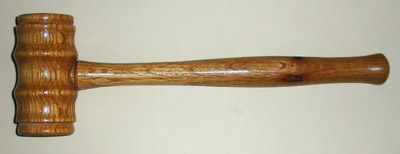
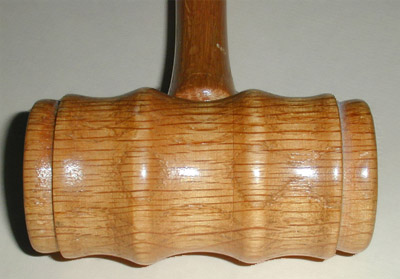
Fashioned from the Boundary White Oak tree located near Abraham Lincoln's birthplace, a tree then 193 years old. The gavel was presented by Wathen Claycomb in Hodgenville, Kentucky. The wood is light in color yet dense, and the grain is quite visible, adding to the aesthetics of the gavel. A knot in the wood provides for an interesting notch in the lower area of the handle.
Accompanied by old typed label apparently from a previous exhibit or collection: "Standing upright: 4. Gavel presented by Wathen Claycomb, Hodgenville, Kentucky, October, 1974, and is from Boundary White Oak tree now over 400 years old, located near the Abraham Lincoln birthplace, Hodgenville, Kentucky."
The Boundary Oak is an historically important artifact and was the "last living link" to Abraham Lincoln until it died in 1976. Although the creator of the gavel apparenty believed it to be over 400 years old, scientific analyses have since determined that the oak sprouted in 1781. At the end of its life, the Boundary Oak reached 6 feet in diameter, 90 feet in height, and had a crown spread of 115 feet. It was first identified as a specific boundary marker and survey point for determining property lines in the original 1805 survey of the Sinking Spring Farm where Abraham Lincoln grew up, and stood less than 150 yards from the cabin where Lincoln was born in 1809. The tree was removed in 1986, and a cross section is now located in the Visitor Center at the Abraham Lincoln Birthplace National Historic Site, three miles south of Hodgenville, Kentucky. There it serves as a template for a chronology of Abraham Lincoln's life and related events. Its stump still exists on site as the primary identifying feature of the original farm boundary.
Reference:
"Lincoln Commeration and Creation and Development of the Abraham Lincoln Birthplace National Historic Site, 1865-1935." Abraham Lincoln Birthplace Historic Research Study. 22 January 2003. http://www.nps.gov/abli/hrs/hrs2f.htm (4 June 2003).