Berthe Hoola van Nooten (1817-1892) (after)
Pieter De Pannemaeker (lithographer)
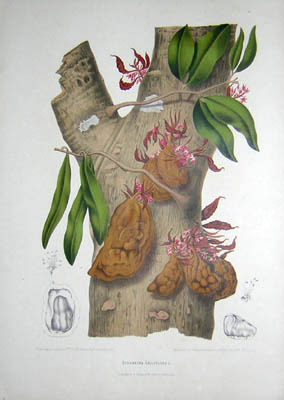
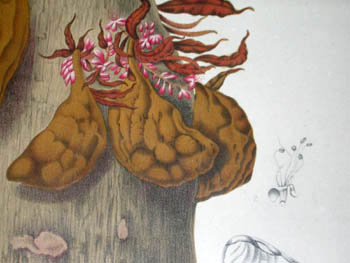
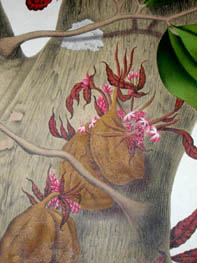
Cynometra Cauliflora [NamNam]
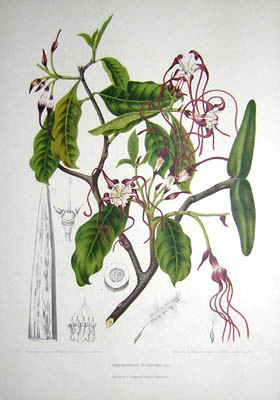
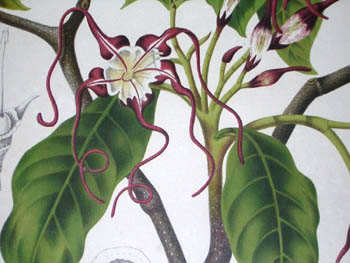
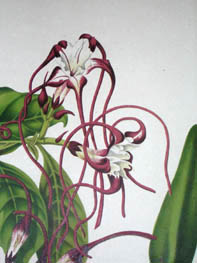
Strophanthus Dichotomus [Kombé]
C. Muquardt, Brussels: c. 1863-1885
from Fleurs, Fruits et Feuillages Choisis de l'Ile de Java
[Selected Flowers, Fruit and Foliage from the Island of Java]
Chromolithographs
21.75 x 15.75 inches, overall
Sold, please inquire as to the availability of similar items.

Exotic Javan Botanicals
After Berthe Hoola van Nooten
After Berthe Hoola van Nooten
This item is sold. It has been placed here in our online archives as a service for researchers and collectors.
- Please inquire as to the availability of similar items currently in stock, or use the navigation bar above to browse our site for currently available items.
- Find guidelines for the use of images from georgeglazer.com.
- To see more archived items, view our directory.
- Find information about selling your art and antiques.
 |
 |
 |
 |
 |
 |
Pair of large rare prints of exotic botanical specimens from the island of Java.
Cynometra Cauliflora, or Nam Nam, is native to Southeast Asia and is a small tree having a knotted trunk yielding edible light brown or greenish yellow flowered fruit.
Strophanthus Dichotomus is a tropical liana native to Africa and Asia and belongs to the order Apocyneae. Its blossoms are highly attractive, and have been used by the women of East-India in their head-dresses. The petals are long and slender, extending into curly fringes. The seeds, however, contain a thick liquid that is toxic enough that natives used it to tip their arrows and kill animals. In 1885, a British doctor extracted a drug called strophantin from the plant, which was used in cardiology until it was replaced by other drugs.
Berthe Hoola Van Nooten accompanied her husband to Jakarta (then known as Batavia), the capital of Java, where he died. Left with debts to pay and a family to support, she marketed a selection of her paintings as chromolithographs and published under the title Fleurs, Fruits et Feuillages Choisis de l'Ile de Java Peints D'Après Nature, the first edition of which appeared in 1863-4 with the backing of the Queen of the Netherlands. Employing great skill, Van Nooten accentuated the beauty of each species depicted through precision and a touch of neo-Baroque style.
Pieter De Pannemaeker was a prolific watercolor artist and engraver active in Gand, Belgium, in the 19th century. He specialized in landscapes and botanicals and contributed to many periodicals and publications at a time when Belgium was a center for botanical publishing. His credits include art and engraving for Lindenia and L’Illustration Horticole.
References:
Bénézit, E. Dictionnaire critique et documentaire des Peintres, Sculpteurs, Dessinateurs et Graveurs. France: Librairie Gründ, 1966. Vol 6, p. 503. (De Pannemaeker)
“Poisonous Plants and Animals: Strophanthus.” ThinkQuest. 2000. http://library.thinkquest.org/C007974/1_3stro.htm (26 July 2004).